


English Toffee: How We Make It, and Why It Keeps
The kitchen smells different in October. In July it is mostly sugar and cream and whatever ice cream flavor somebody just opened. By the middle of October, with the back door shut against the wind, the smell that fills the room is browning butter. That is toffee cooking, and it is the batch we pay the closest attention to all year.
We have been making candy by hand, in small batches, since 1977. Some of it is forgiving. Fudge will wait for you. Caramel will mostly wait for you. Toffee will not.
What English toffee actually is
Two ingredients carry it: butter and sugar. That is close to the whole list. There is no cream in it, which is what separates toffee from caramel. Caramel stays soft because of the dairy. Toffee gets cooked hotter and further, until the sugar goes past chewy and into brittle, and then it snaps.
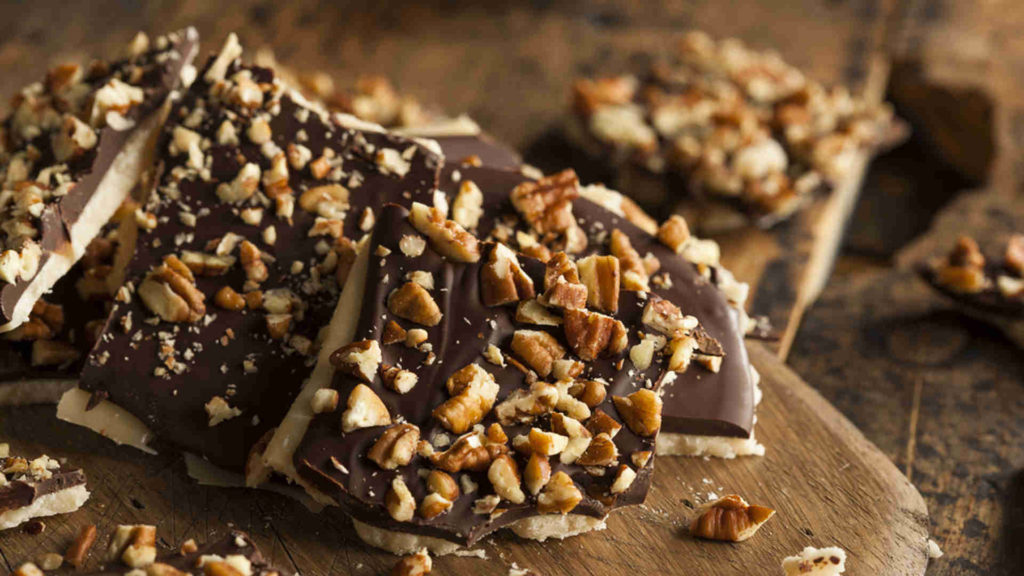
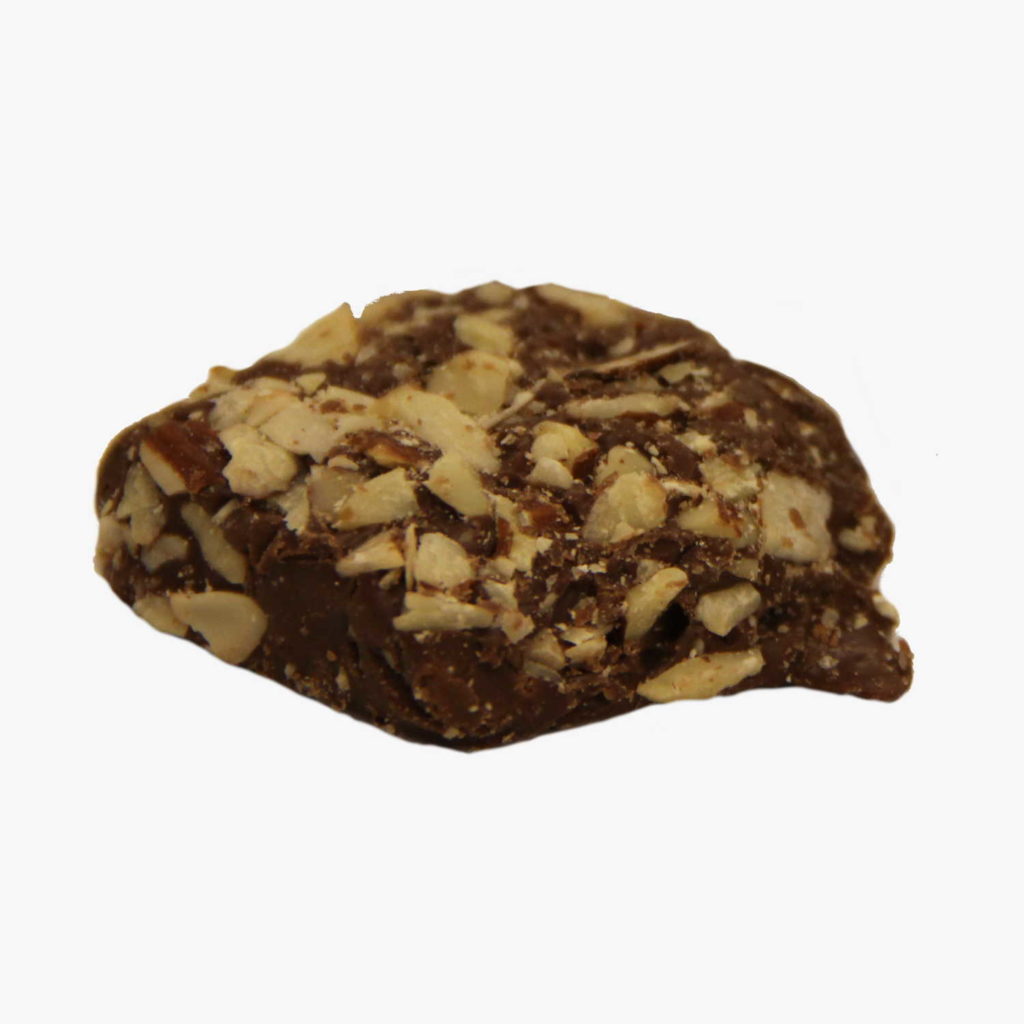
Ours gets almonds and a layer of chocolate over the top. Bite through it and you get three things in order — the snap, then butter, then the toasted almond underneath. It is a loud candy. People eat it standing over the counter so the pieces do not get away from them.
The part where you cannot walk away
Butter and sugar go in the kettle together and come up slowly. For a while nothing looks like it is happening. Then the batch starts to change color, and once it starts it moves fast — pale gold, then honey, then the shade of a penny. That last stretch is maybe a minute wide.
You go by color and by smell more than anything. Pull it early and it will be soft and taste flat. Leave it thirty seconds long and the butter scorches, and there is no fixing that. You start over. Everyone who has made candy for a living has thrown out a batch of toffee and taken the lesson.
When it is right, it goes out onto the slab and gets spread thin while it is still moving. Chocolate goes on while the surface is hot enough to melt it, which is the trick — the chocolate marries into the toffee instead of sitting on top of it like a lid. Almonds go over that. Then it cools, and it sets up hard, and we break it into sheets by hand. The pieces come out uneven on purpose. A toffee piece cut square looks like it came out of a machine.
It travels better than anything else we make
This is the practical reason we make a lot of toffee once the weather turns. Toffee has no cream in it and nothing soft to go wrong. It does not bloom, it does not weep, and it does not mind a cold mailbox. Of everything in our cases, it is the piece we feel best about putting in a box and sending across the country.
We ship anywhere in the United States from our online store, and orders over fifty dollars ship free. If you are mailing candy to somebody for the holidays, order earlier than feels necessary. Everyone decides at the same time, and the last two weeks of December belong to the shipping companies, not to us.
There is a sugar-free version
Toffee is a hard candy to make without sugar, because sugar is most of the structure. Ours comes out close — the same snap, the same almonds, the same browned-butter flavor. It is usually in the case alongside the rest of our sugar-free selection. If you are driving a long way for it, call ahead, because sugar-free items sell out faster than we expect them to.
Where to find it right now
Both shops have English toffee most days, though the calendar matters this time of year.
- Keystone, 117 Winter Street — open spring through October, so these are the last days of the season. Hours get shorter as the month runs out and they move with the weather. Call ahead if you are making the drive.
- Hill City, 205 Main Street — open year-round. Once Keystone closes, this is the shop, and the European-style coffee bar is here. A piece of toffee next to an espresso is the best five minutes of a cold afternoon.
- Ice cream — still running at both shops while Keystone is open. Nobody believes us until they see somebody order a specialty sundae in a forty-degree breeze.
If you are wondering whether a late-fall or winter trip up here is worth it, the short answer is yes, and quieter. Mount Rushmore is open every day of the year except December 25, when the buildings close but the grounds stay open if the weather allows. The parking is easy. The viewing terrace is nearly empty some mornings. And Hill City is twenty minutes down the road with the lights on and the kettles going.
Come by on a cold day and ask what is on the slab. Most days in the next few months, the answer involves butter.